Case Study • Crystal Reyes
The Village at Cobblestone Community Hub
Building a 'front door' for the neighborhood, surfacing hard-to-find homeowner information, payment portals, and resident resources.
Overview
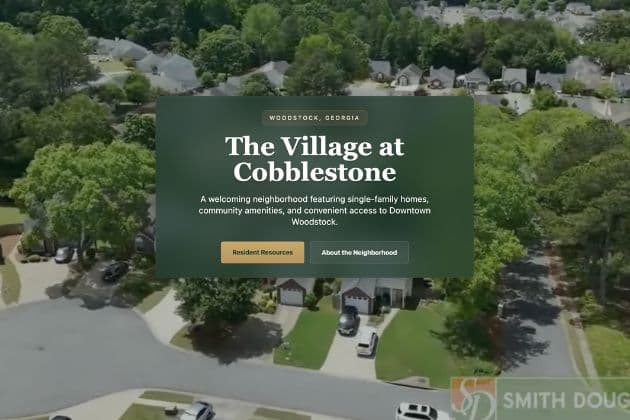
The Village at Cobblestone digital platform helps unify a patchwork of community flyers and community Facebook group posts. I designed the platform to serve as a high-performance 'front door' for the neighborhood, surfacing hard-to-find homeowner information, the HOA payment portal, and essential resident guidelines in one accessible location.
What I Owned
I owned the end-to-end delivery of the community platform, implementing the resource directories and HOA contact hubs while ensuring a highly intuitive interface for residents of all technical comfort levels.
The Challenge
HOA communication traditionally relied on a combination of physical newsletters, community Facebook group posts, and a hard-to-find HOA portal. As the community grew, there was an opportunity to centralize these resources into a single digital hub, making it easier for residents to find key information and helping the board surface information more efficiently.
Distributed communication channels
Essential HOA information was often distributed across multiple physical and digital platforms, making it difficult for residents to quickly locate the specific resources they needed.
Opportunity for centralized resources
Providing a single digital location for HOA documents and guidelines is designed to reduce repetitive inquiries and empower residents with self-service information.
Broad usability requirements
The platform had to be highly intuitive and functional for residents of varying technical comfort levels to ensure high adoption.
The Solution
I built a mobile-first platform with React, TypeScript, and Vite, using Sanity.io for real-time content management. The architecture was designed for residents who need clarity, supported by a professional content management system that allows for rapid and reliable updates to community resources.
- 1Integrated Sanity.io to provide a streamlined, real-time content management workflow for community guidelines and resources
- 2Built comprehensive amenities pages and HOA contact directories, providing residents with instant access to community resources and board leadership
- 3Implemented mobile-first UI using Tailwind CSS and shadcn/ui, optimized for usability across device types and technical comfort levels
- 4Used Sanity.io as the content layer for announcements, guidelines, and resource directories, allowing for streamlined publishing and updates without needing manual code changes
- 5Applied TanStack Query for efficient data fetching and background synchronization, reducing loading states and improving perceived performance
- 6Achieved WCAG 2.1 AA compliance throughout, including focus management, ARIA landmarks, and keyboard-navigable interfaces
Outcomes & Impact
The platform is in its initial launch phase, designed to consolidate the community's communication into a single reliable source of truth and materially reduce administrative overhead for the HOA board.
Fragmented communication channels, including physical newsletters, social media, and a hard-to-find HOA portal, are helped by a single platform residents trust.
The Sanity CMS integration and centralized resource directories are built to free the board from manual update cycles by providing a modern, efficient publishing workflow.
The architecture is designed to grow with the community, meaning adding new modules or onboarding additional properties requires configuration rather than a rebuild.